Choose how you want to grow and pick
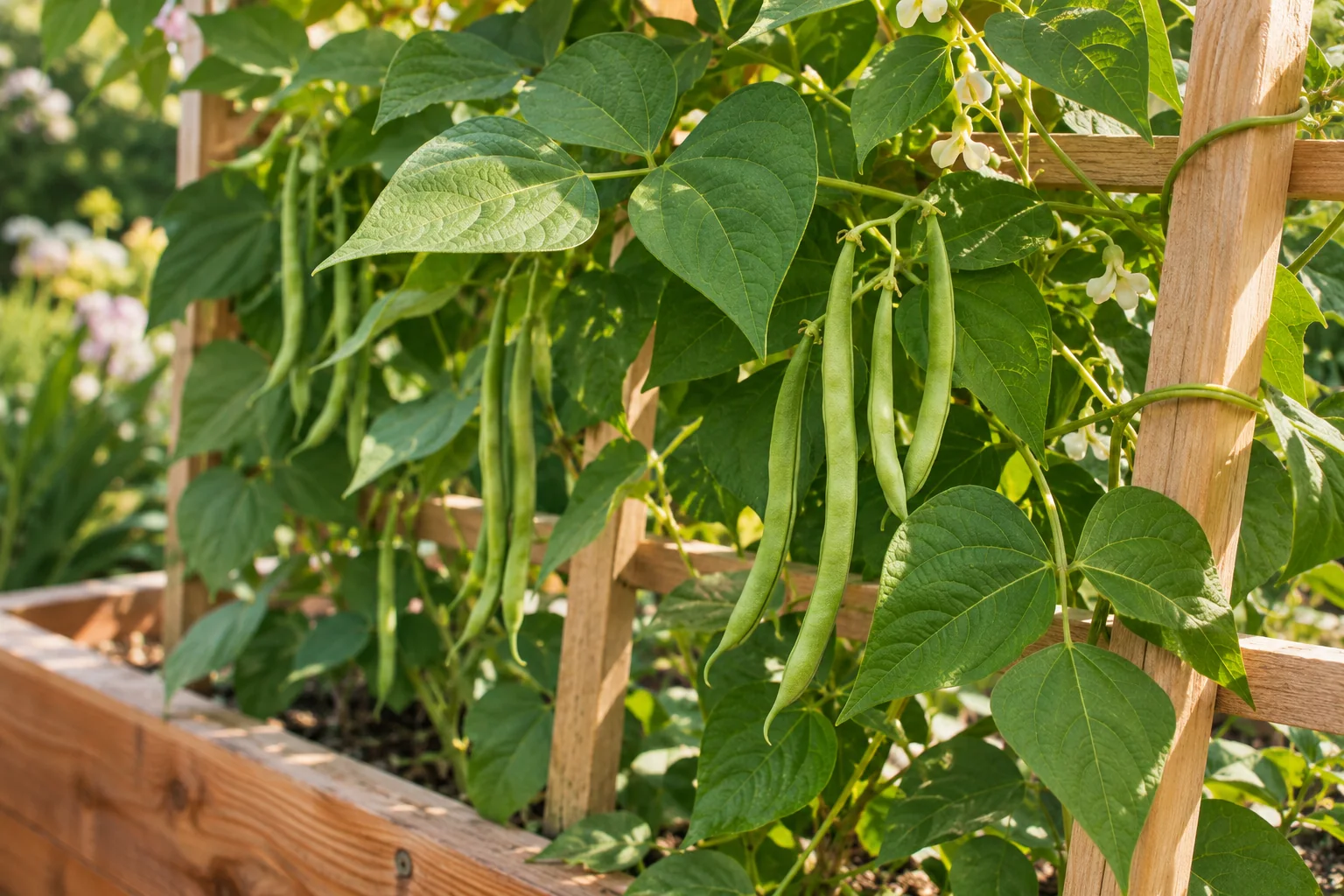
Bush beans stand upright without a trellis. Pole beans climb and generally produce over a longer period once harvesting begins. Both include varieties harvested for their tender pods, so choose a snap-bean variety if green beans are the goal. [2] [4]
| Type | Plant spacing | Support |
|---|---|---|
| Bush snap beans | 2–4 inches apart; rows 24–30 inches apart | No trellis needed |
| Pole beans | 4–8 inches apart; rows 24–36 inches apart | A sturdy 6–8-foot trellis |
Check packet directions for your variety. Place a trellis where you can reach both the vines and their pods, and make it strong enough for wind and rain. [1] [2]
Wait for warm soil, then sow directly
In Cincinnati, plan beans for the warm part of spring after frost risk has passed. Check the bed itself before sowing: Clemson recommends at least 60°F at a depth of four inches. Cold, wet soil can leave you with rotted seed and patchy rows. Choose full sun and soil that drains well. [1]
Sow seed directly in the garden about one inch deep. Put pole-bean supports in place at sowing. Do not soak bean seed first; too much moisture can cause seeds to crack and germinate poorly. Water the planted row and keep it moist without leaving it waterlogged. [3] [4]
Use smaller sowings for a longer season
A single large bush-bean sowing can create more picking than your kitchen needs at once. For a steadier supply, sow smaller batches about two weeks apart while enough warm growing time remains. Pole beans keep flowering and bearing through the season, so repeated sowings are usually unnecessary. [3]
Before a later sowing, compare the variety's stated maturity period with the growing time left before your expected fall frost. Maryland Extension lists roughly 50–60 days for bush snap beans, while pole types vary more widely. Treat those figures as estimates, since variety and growing conditions affect the result. [2]
Give developing pods consistent moisture
Use about one inch of weekly rain plus irrigation as a starting point, then check the soil with a trowel. Water thoroughly enough to moisten the root zone; a damp surface alone does not show how much water has reached it. Sandy soil usually needs more frequent attention. [3]
Pay particular attention as pods set and enlarge. Direct water onto the soil when possible. Pull small weeds or cultivate only the surface so you do not damage nearby roots. Mulch can help with moisture and weeds once the bed is established. [1] [3]
Pick tender pods when plants are dry
Harvest snap beans while pods are firm and tender, before the seeds inside become prominent. Inspect the crop frequently once picking starts. Hold the plant steady and detach the pod carefully; rough pulling can break its brittle stems and branches. [4]
Wait until rain or morning dew has dried before moving through the plants. Handling wet foliage can spread bacterial blight. Regularly removing ready pods also encourages continued flowering and bean production, so look under leaves where mature pods are easy to miss. [4]
Common mistakes to avoid
- Feeding for leaves instead of pods. Excess nitrogen can delay flowering. Use soil information to guide feeding rather than routinely applying more fertilizer. [2]
- Assuming flower drop means the crop is finished. Heat, particularly above 90°F, and drought can reduce pod set. Check moisture and watch how plants respond as conditions improve. [5]
- Ignoring the undersides of leaves. Look for feeding damage and insects during regular checks. Mexican bean beetles can leave leaves looking lacy; hand removal of identified eggs and larvae is one practical response. [5]
- Letting pods become large and seedy. Harvest promptly for better eating quality and continued production. [5]
Sources
- Bush & Pole-Type Snap BeansClemson Cooperative Extension
- Growing Beans in a Home GardenUniversity of Maryland Extension
- Growing beans in home gardensUniversity of Minnesota Extension
- Snap BeansUniversity of Illinois Extension
- Common Problems of Green Beans in the Home GardenIowa State University Extension and Outreach