Use the weather to choose planting day
For a Cincinnati garden, May is a planning window, not a promise of frost-free weather. Ohio State places southern Ohio tomato planting one to two weeks ahead of its central Ohio guideline of May 20 or later, while warning that those dates do not eliminate frost risk. Check your forecast before moving plants outside. [1]
Check the soil as well: Penn State recommends waiting until it reaches 60°F three inches below the surface. A warm afternoon does not establish that the bed is ready. If conditions are still cold, keep transplants protected and wait. [2]
Choose a growth habit you can manage
The words determinate and indeterminate on the label matter as much as fruit color. Choose according to your available space and how you want to harvest. [3]
| Type | Growth and harvest | Planning choice |
|---|---|---|
| Determinate | Stops extending once terminal flowers form; fruit ripens in a concentrated period. | Useful when you want a batch for cooking. |
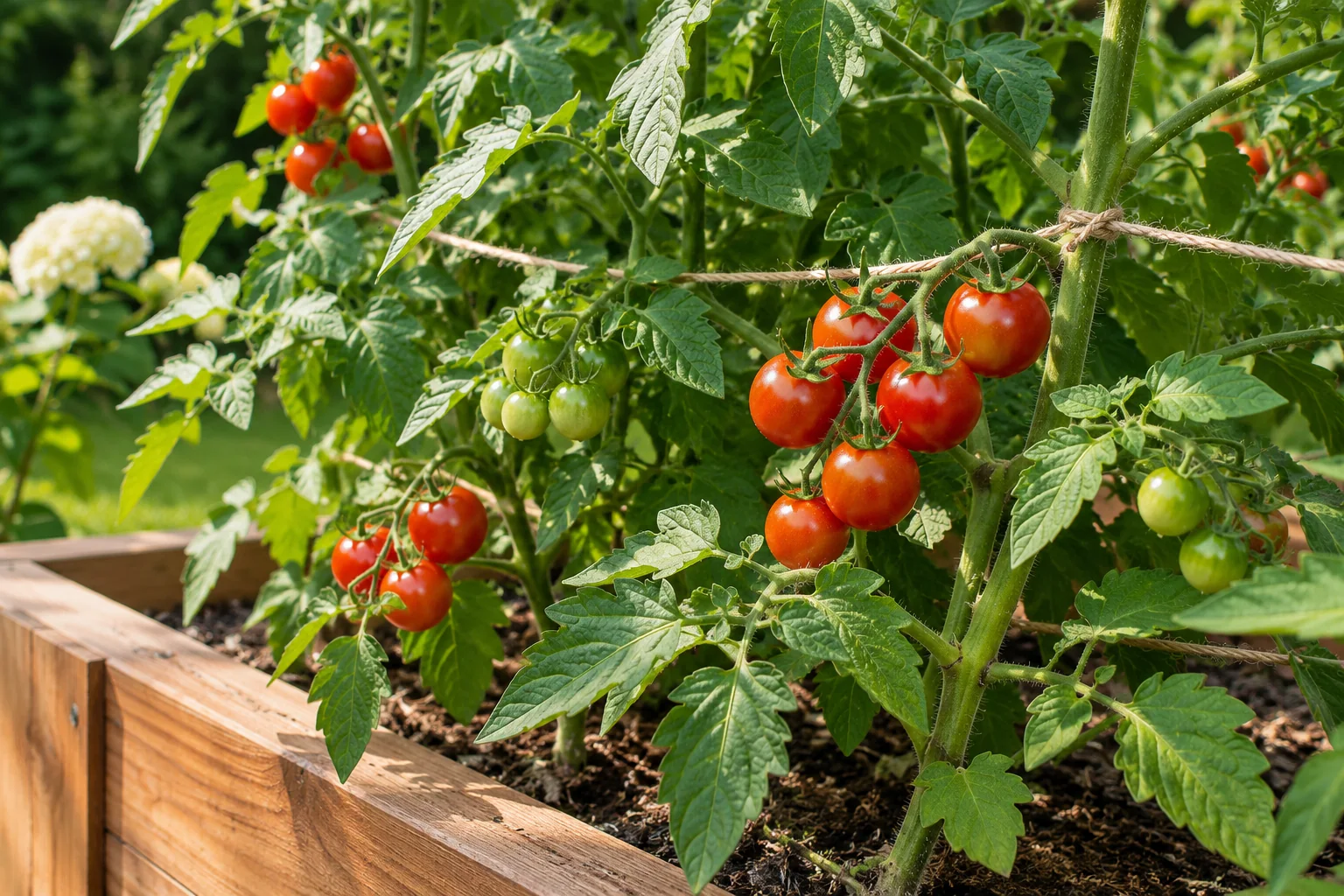
| Indeterminate | Keeps extending and producing through the warm season. | Allow room for a sturdy cage, stake, or trellis. |
Vining plants commonly need two to three feet between plants. Check the variety and support system before filling every open spot. [3]
Prepare the bed and the transplant
- Find the sun. Choose a well-drained site with at least six hours of direct sunlight.
- Start with a sturdy plant. Look for a stocky transplant, and gradually increase outdoor sun and wind exposure over about a week.
- Plant some stem below ground. Remove the lowest leaves first. Tomatoes can make roots from buried stem tissue.
- Set support now. Install the cage or stake at planting, water the root zone thoroughly, and tie supported stems loosely as they grow.
These steps establish the plant and its support together, before heavy growth makes access awkward. [6]
If starting from seed, work backward about five to six weeks from your expected transplant date. A later planting date means a later seed-starting date, too. [4]
Keep moisture steady at the roots
About an inch of rainfall plus irrigation per week is a useful starting point. Check beneath the surface with a trowel and adjust to actual moisture; sandy soil needs more frequent attention. Soak the root zone rather than giving the surface a quick daily splash. Direct water onto the soil to reduce wet foliage and soil splashing. [3]
Base fertilizer on a soil test. Tomatoes need a consistent moisture supply, but saturated soil is not the goal. Large changes in water availability can also contribute to fruit cracking. [2]
Pick by color and feel
Pick a tomato when it has developed the mature color of its variety and gives slightly under gentle pressure. Handle the fruit carefully. A yellow or orange variety does not need to turn red to be ready. [4]
Before an expected fall frost, collect sound, mature green fruit for indoor ripening. Choose full-size, greenish-white fruit rather than assuming every tiny green tomato will finish. Inspect stored fruit regularly and remove any that begin to decay. [4]
Common mistakes to catch early
- Adding calcium without checking the cause. A dark spot at the blossom end can reflect poor calcium movement into the fruit even when soil contains enough calcium. Review watering, root damage, and soil-test results first.
- Feeding heavily to fix every problem. Excess nitrogen can contribute to blossom-end rot and does not replace consistent care.
- Leaving damaged fruit in place. Fruit with blossom-end rot will not recover; remove it and focus on conditions for later fruit.
Mulch and regular watering can reduce moisture swings, although they cannot prevent every case of blossom-end rot. [5]
Sources
- Best Time to Plant Tomatoes is late May!!Ohio State University Extension
- Tomato ProductionPenn State Extension
- Growing tomatoes in home gardensUniversity of Minnesota Extension
- Growing Tomatoes in the Home GardenIowa State University Extension and Outreach
- Tomato disordersUniversity of Minnesota Extension
- Tomatoes: From Seedlings to FruitPenn State Extension