Plan around cool growing weather
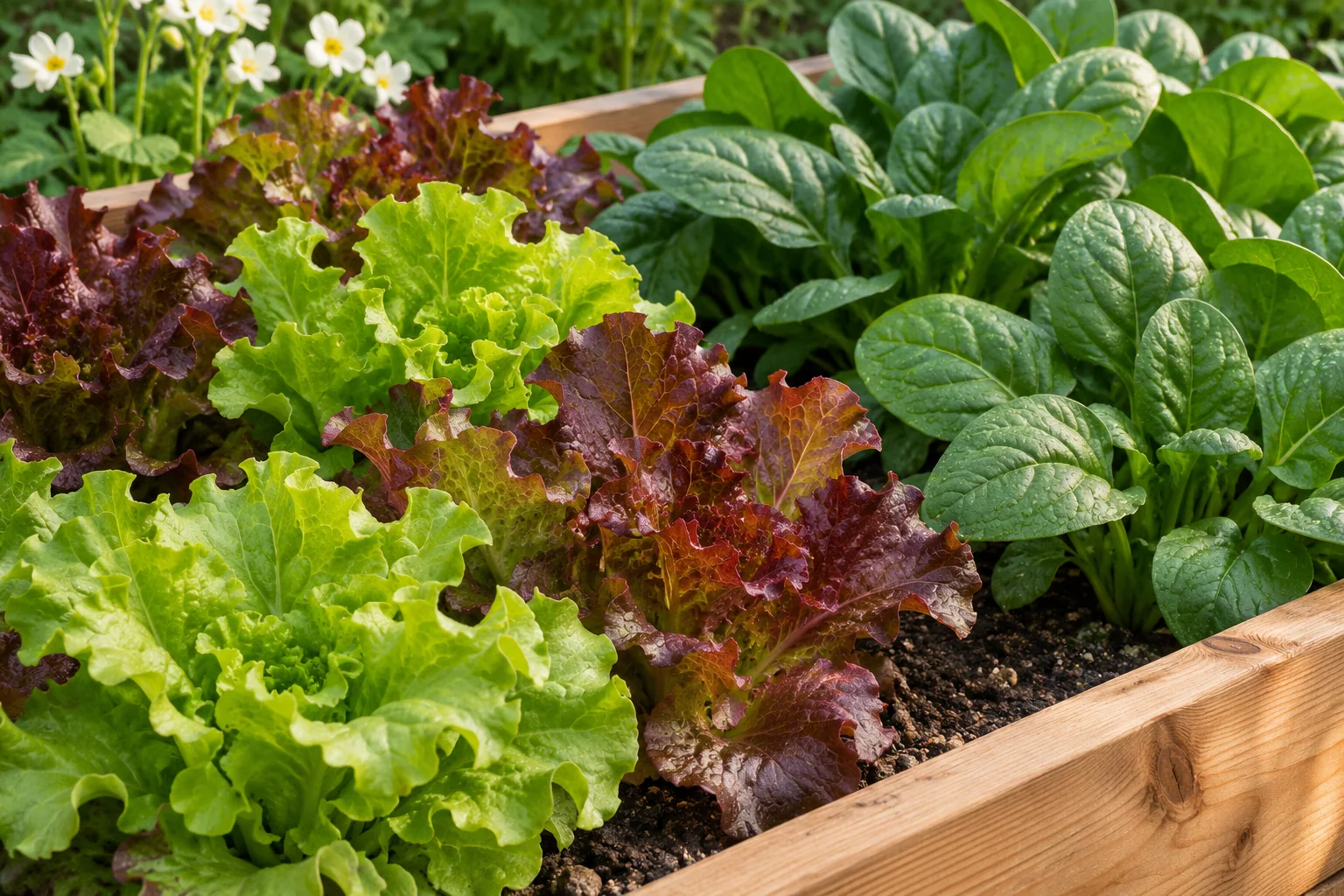
For Cincinnati gardens, use early spring and the cooling end of summer as planning windows, then check your soil and weather. Lettuce can be sown when soil is workable; spinach can be sown once soil reaches about 45°F. Both grow well in spring and fall sun and tolerate partial shade with four to six hours of direct light. [1] [2]
Spinach responds to lengthening days by sending up a flower stalk. Heat and drought speed that response. Plan to finish a spring crop as conditions change, rather than expecting the same planting to provide leaves through summer. [4]
Make a fine seedbed and sow lightly
Lettuce seed is small. Break up surface clods, smooth the bed, and sow sparingly so seedlings can emerge without pushing through large clods. A bed should hold moisture while draining freely. Work compost into the planting area and use soil-test results to guide amendments. [3]
Thin while plants are small. Snipping unwanted seedlings at soil level avoids pulling on the roots you want to keep. Choose spacing for your intended harvest: a full lettuce plant needs more room than leaves picked young. [3]
Give each crop enough space
| Crop and harvest | Seed depth | Space after thinning |
|---|---|---|
| Leaf lettuce, baby leaves | ¼–½ inch | About 5 inches |
| Leaf lettuce, full-size plants | ¼–½ inch | 10–12 inches |
| Spinach | ¼–½ inch | 2–4 inches |
These are starting points; follow your variety's packet where its instructions differ. [3] [4]
During suitable cool spring weather, sow another small spinach patch every one to two weeks. For a fall crop, Minnesota Extension suggests working back about two months from the average first frost. Use that as a planning aid, then adjust for Cincinnati conditions and the variety's growth time. [4]
Keep the root zone evenly moist
Lettuce has shallow feeding roots, so check its bed frequently. Keep water reaching the roots without saturating the soil, and remove small weeds carefully rather than hoeing deeply near plants. [1]
A dry spell followed by a sudden return to rapid growth can contribute to browned leaf edges called tipburn. [3]
Spinach also performs best with steady moisture. Water deeply during dry periods and pull young weeds before they compete with the crop. Mulch beside established rows can help limit new weeds. [2]
Harvest leaves and leave the center
For loose-leaf lettuce, pick usable outer leaves while leaving the center to continue growing. If you want a whole head, harvest when it reaches the form expected for that type: butterheads make a loose head, while romaine forms an upright cluster. Do not wait for every lettuce to resemble an iceberg head. [1]
Pick full-size spinach leaves individually, keeping the central growing point intact. Thinnings are useful, too. Take a final harvest when flower stalks begin to form; that planting is moving into seed production. [2]
Common mistakes that shorten the harvest
- Resowing into hot soil. Poor summer emergence may be a temperature problem. Penn State lists optimum germination ranges of 40–80°F for lettuce and 45–75°F for spinach. Check the seedbed before repeating the same sowing. [5]
- Expecting shade to solve every heat problem. Afternoon shade can help lettuce, but heat and increasing day length still encourage bolting and bitter flavor. [1]
- Leaving a warming cover on. Row covers can protect young spinach from cold and insects. Remove the warming cover as weather heats up, or change to lightweight insect mesh so heat does not build around the crop. [4]
Sources
- Growing Lettuce in a Home GardenUniversity of Maryland Extension
- Growing Spinach in a Home GardenUniversity of Maryland Extension
- Growing lettuce, endive and radicchio in home gardensUniversity of Minnesota Extension
- Growing spinach and Swiss chard in home gardensUniversity of Minnesota Extension
- Seed and Seedling BiologyPenn State Extension